
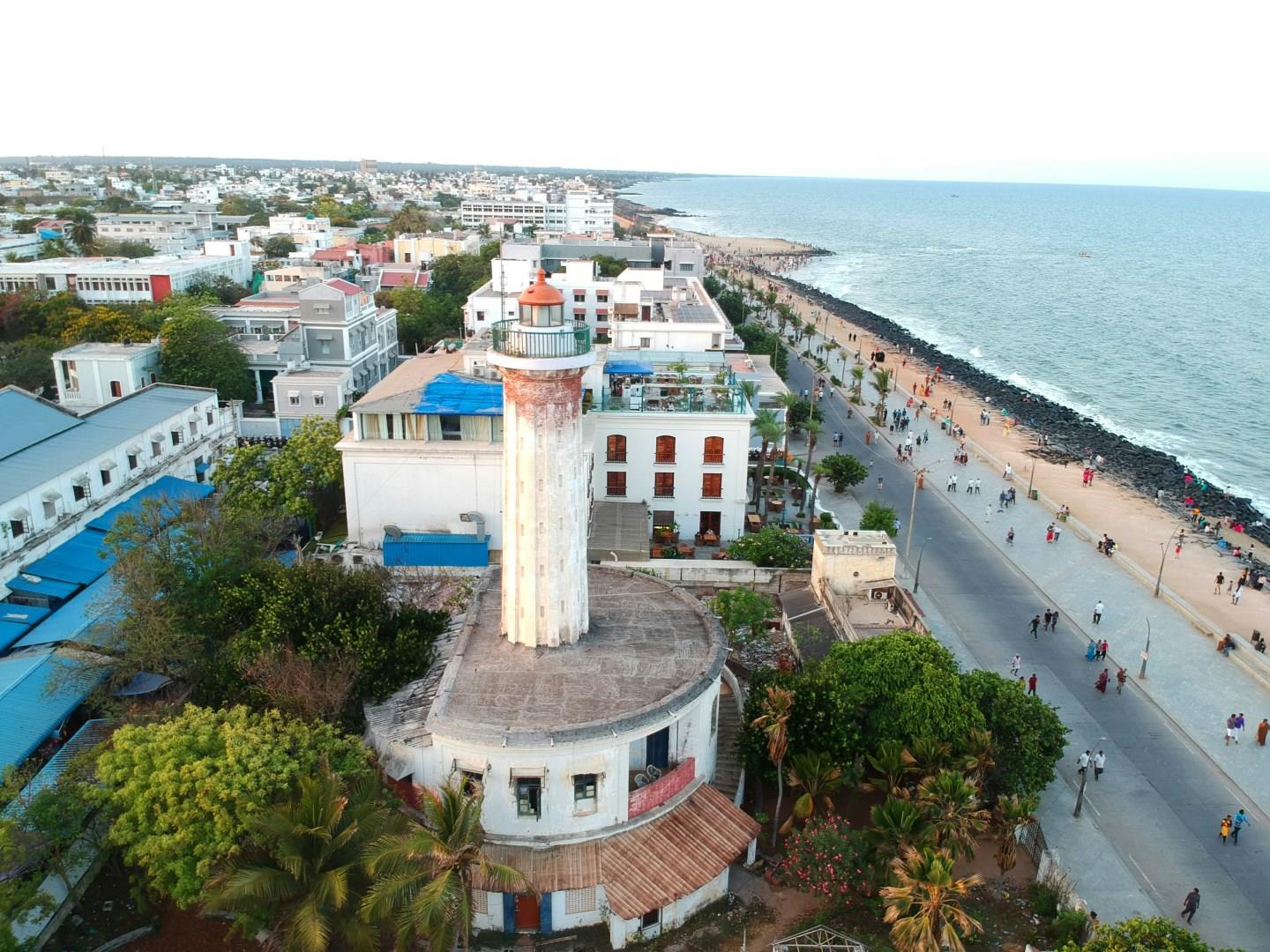
Pondicherry
Pondicherry is a coastal town in southern India that still carries traces of its French colonial past. The French Quarter, or White Town, is filled with mustard-yellow buildings, iron-laced balconies, and streets with French names. Visitors can explore this area on foot or by bicycle, stopping at spots like the 18th-century Eglise de Notre Dame des Anges, built in Greco-Roman style, or the French Consulate, which continues to operate from a colonial-era building.

Antananarivo
Antananarivo, Madagascar’s vibrant capital, offers a unique blend of cultural richness and historical depth. Perched on a series of hills, the city’s layout is characterized by its steep streets and traditional architecture. The Royal Palace, or Rova of Antananarivo, is a central landmark, offering a glimpse into Madagascar's royal past. Although much of the palace was destroyed by fire in 1995, the site remains a significant cultural and historical monument.

Kotor
This coastal town in Montenegro is part of the World Heritage Site dubbed the Natural and Culturo-Historical Region of Kotor. It holds several summer events, such as the Summer Carnival or Bokeljska Noc. One of the most notable and charming aspects of the town is the large population of cats that have become a symbol of the city.
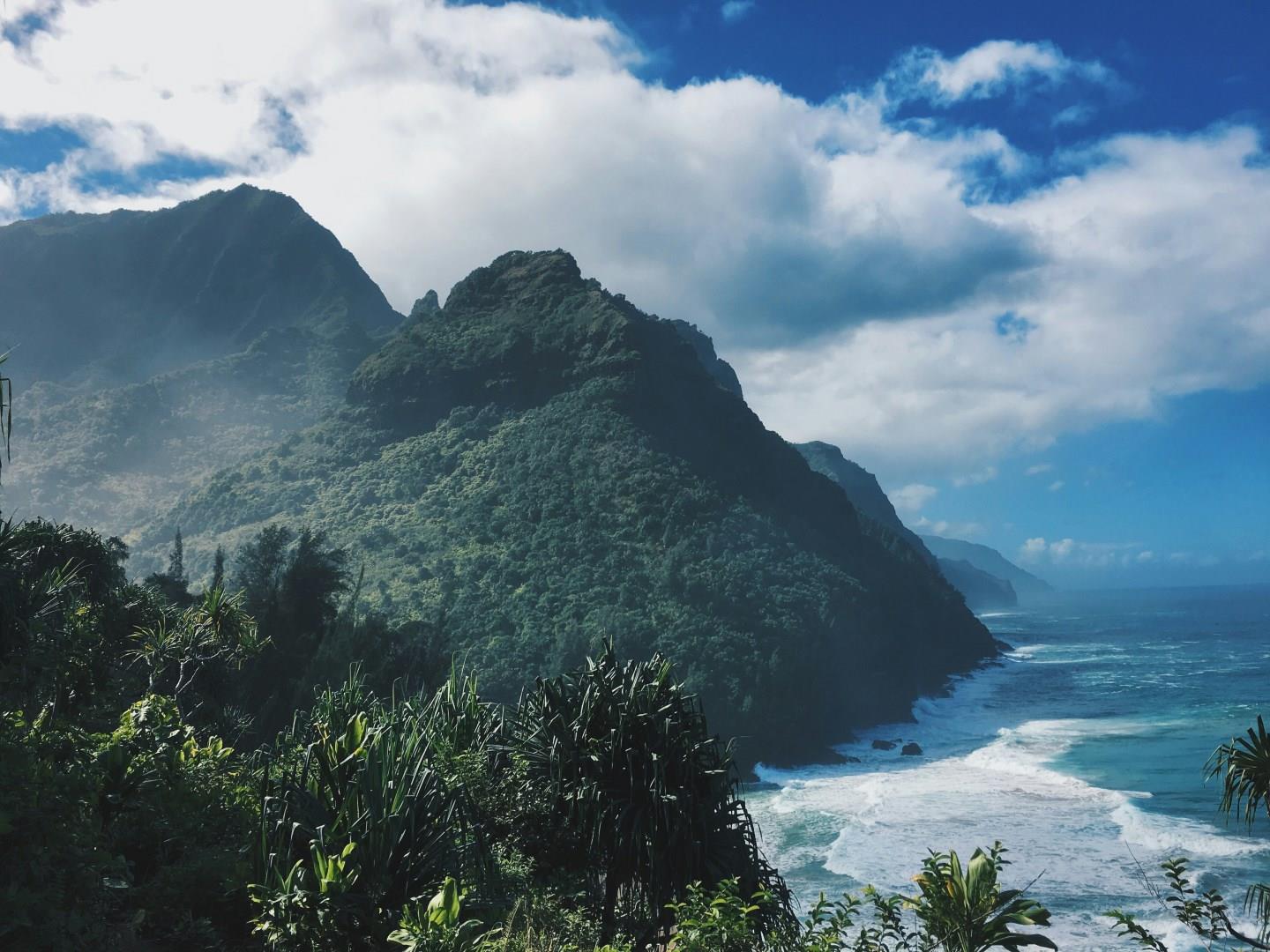
Kapaa, Kauai
Kapaa, a coastal town on the east side of Kauai, offers a laid-back alternative to Hawaii’s more developed resort areas. Despite its small size, Kapaa is one of the most populated towns on the island, making it a central hub for exploring the Coconut Coast, a stretch of shoreline dotted with towering palms and scenic overlooks.

Mongolia
Mongolia, a landlocked nation between Russia and China, is defined by vast steppes, dramatic mountain ranges, and the sweeping expanse of the Gobi Desert. Known for its nomadic traditions, the country preserves a way of life that has endured for centuries.
