Jeddah sits along Saudi Arabia’s Red Sea coast and has long served as a gateway between the Arabian Peninsula and the wider world. For centuries, merchants, pilgrims, and travelers passed through its port on the way to Mecca, shaping a city known for openness and exchange.
Trebinje, the southernmost city in Bosnia and Herzegovina, sits just a short drive from the Adriatic coast but offers a completely different rhythm. Framed by hills and set along the Trebišnjica River, the city has a history stretching back to Roman times. The river that winds through the city is one of the longest sinking rivers in the world and often disappears underground and resurfaces in various places.
The Falkland Islands, a remote archipelago in the South Atlantic, offer a striking combination of wild open spaces, rich wildlife, and a way of life shaped by wind, sea, and resilience. With fewer than 3,500 residents spread across over 700 islands, the Falklands provide a rare opportunity to disconnect from busy modern life and connect with wide skies, rugged coastlines, and some of the most accessible wildlife experiences on the planet.
Fujairah stands apart among the emirates as the only one on the UAE’s eastern shore, where waves roll in from the Gulf of Oman and the Hajar Mountains rise sharply behind the city. Life here moves between sea and mountain, where coastal breeze meets rugged terrain, and echoes of ancient trade routes still shape the rhythm of settlements.
Stratton is a mountain destination in southern Vermont, United States, centered around Stratton Mountain Resort. It sits within the Green Mountains, where forested slopes and changing seasons define the landscape.
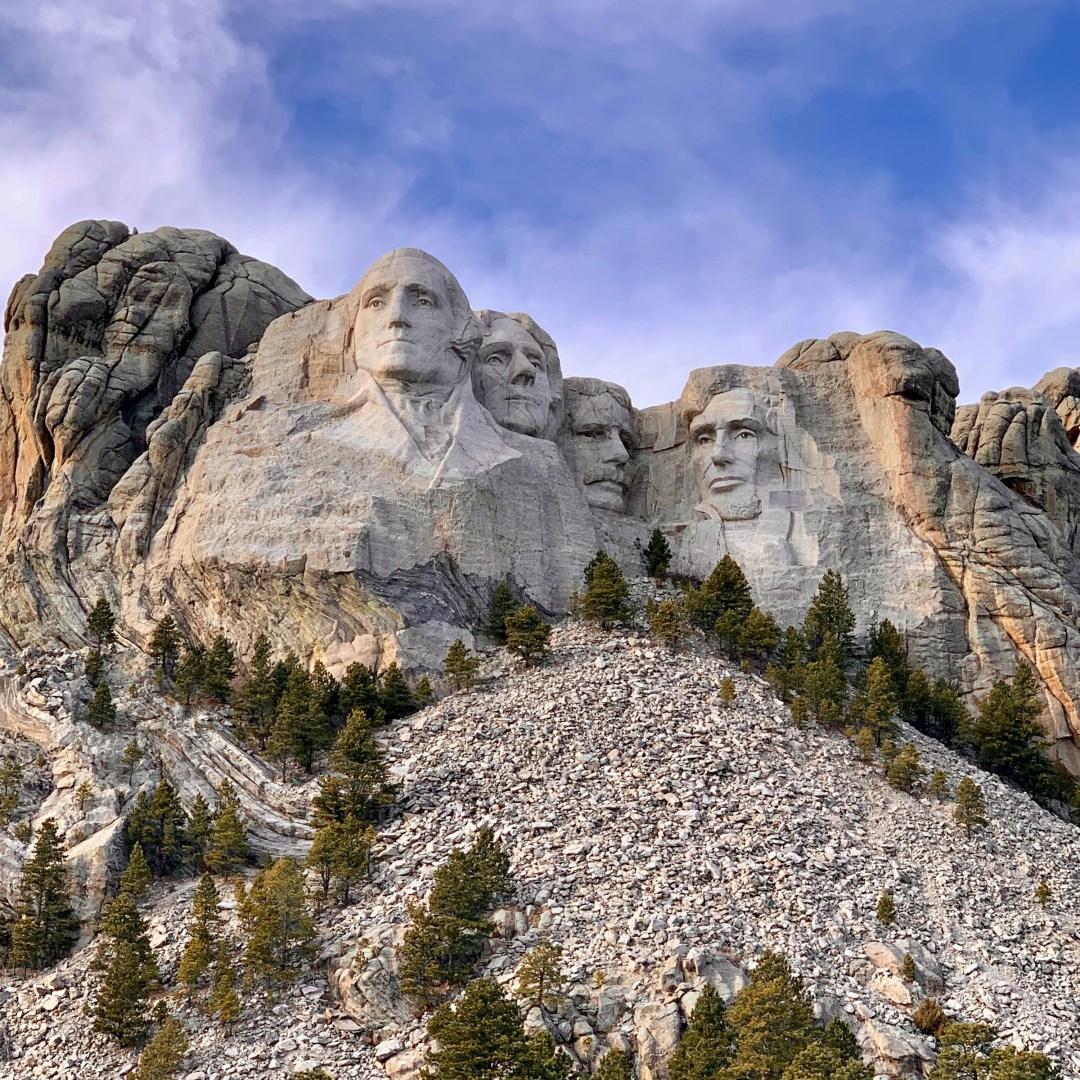
Located about twenty-five miles southwest of Rapid City, South Dakota, lies Mount Rushmore. Following Highway 244 from the west leads to the orientation center. There exhibits tell how sculptor Gutzon Borglum carved away twice the rock needed to construct Egypt's Great Sphinx (which isn't even as tall as Washington's nose). Through a 25-cent telescope one can witness Washington's wide brow and the sad, determined line of Lincoln's mouth, shaped by the terrible decisions of the Civil War. Jefferson gazes heavenward, eyes abrim with lofty ideas. One can observe Teddy Roosevelt's bully grit. And you realize that Borglum intended to incise basic American ideals here, to present history writ large in stone.
Borglum set about creating Mount Rushmore's famous 60-foot-high faces of George Washington, Thomas Jefferson, Theodore Roosevelt, and Abraham Lincoln by blasting and drilling them from Rushmore's gray pegmatite granite. He started work in 1927, wanting to sculpture full busts of the four Presidents, but died in 1941 with only the heads
completed, and almost no work has been done on the mountain since that time. The artist had chosen these President's because he felt they represented America's ideals and also her territorial destiny: Washington, land surveyor and father of his country; Jefferson, architect of the Louisiana Purchase; Lincoln, preserver of the Union in the face of civil war; and Theodore Roosevelt, extender of American prestige abroad and engineer of the Panama Canal Zone acquisition.
Mount Rushmore National Memorial and nearby parklands bring millions of visitors to South Dakota's Black Hills each year.