Luang Prabang, the jewel of northern Laos, captivates travelers with its blend of serene spirituality, French colonial charm, and breathtaking natural beauty. This UNESCO World Heritage Site is nestled between the Mekong and Nam Khan rivers, creating a tranquil setting where time seems to slow down. Here, ancient temples with glistening spires, like Wat Xieng Thong, sit alongside quaint colonial-era villas, inviting visitors to explore the harmonious fusion of Lao and French cultures.
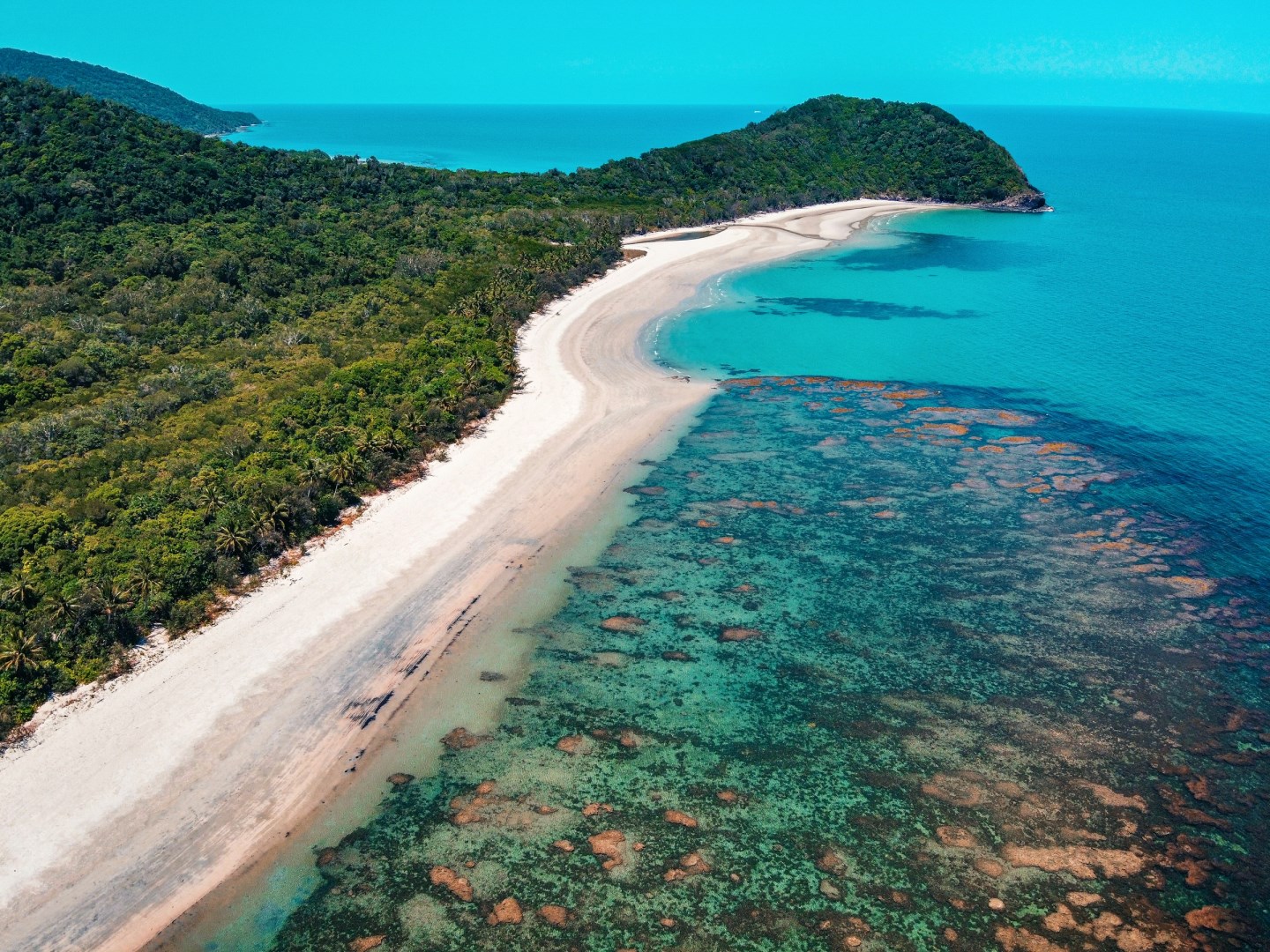
The largest virgin tract of rainforest in Australia (and the second largest in the world), this lush, tropical World Heritage area is a living testimonial to the ancient rainforests which once covered the earth's surface. Cool forest streams, primitive rainforests, stunning mountain scenery and abundant wildlife - a naturalists and bird watchers paradise.
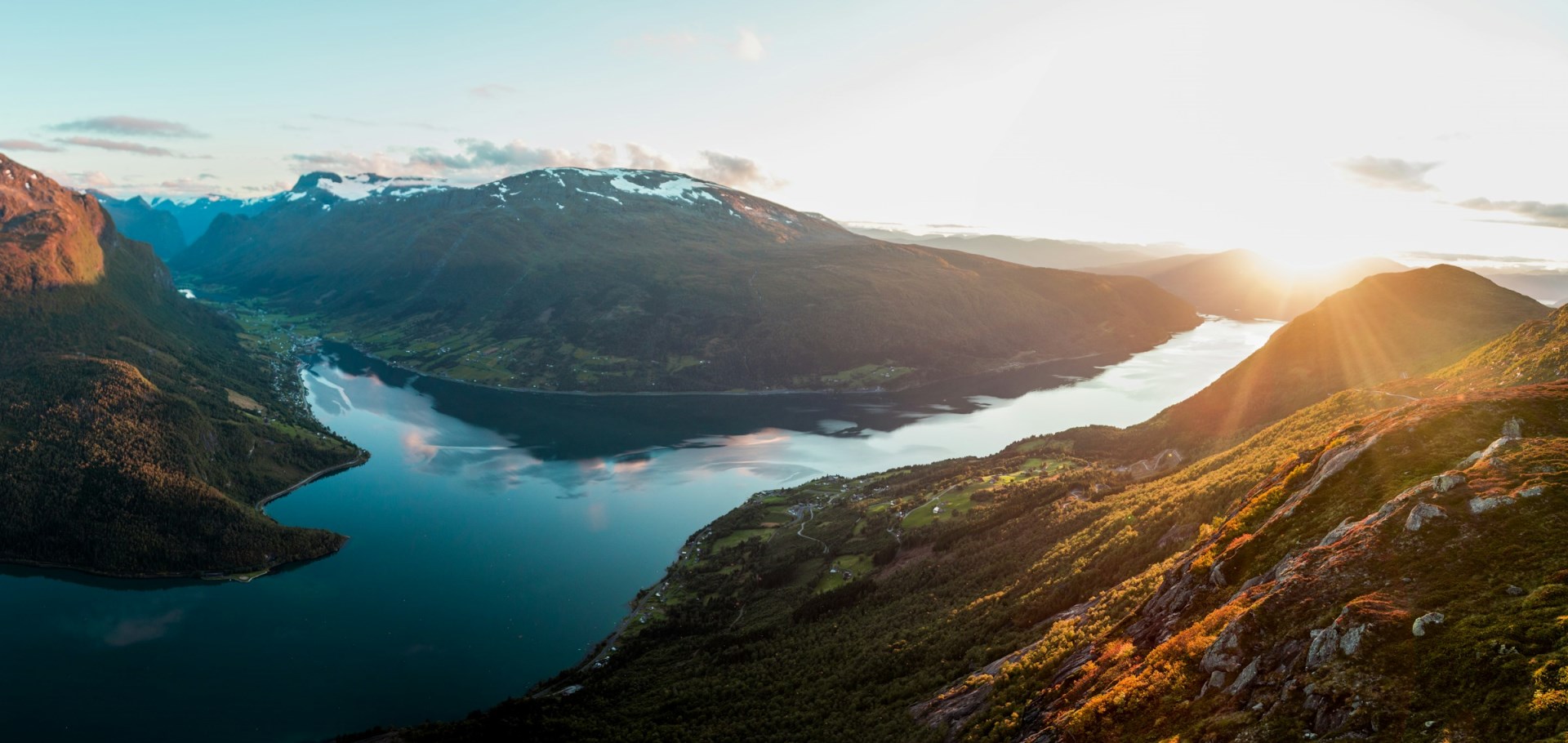
Loen is a small village at the innermost end of Nordfjord in Stryn municipality, western Norway, where steep mountains, deep valleys, and glacier-fed lakes meet the fjord. The village sits beneath Mount Hoven and Skåla, with forested slopes rising sharply from the water. Its location provides easy access to both the fjord and the Lodalen valley, making the landscape unusually varied within a short distance.
Albania offers travelers a surprising and diverse experience shaped by centuries of influence. Visitors can explore the ancient city of Butrint, a UNESCO World Heritage Site with Greek, Roman, Byzantine, and Venetian ruins set against a lagoon. In Berat and Gjirokastër stone houses stack along steep hillsides, giving visitors the sense of walking through a living museum. These towns offer an authentic window into daily Albanian life.
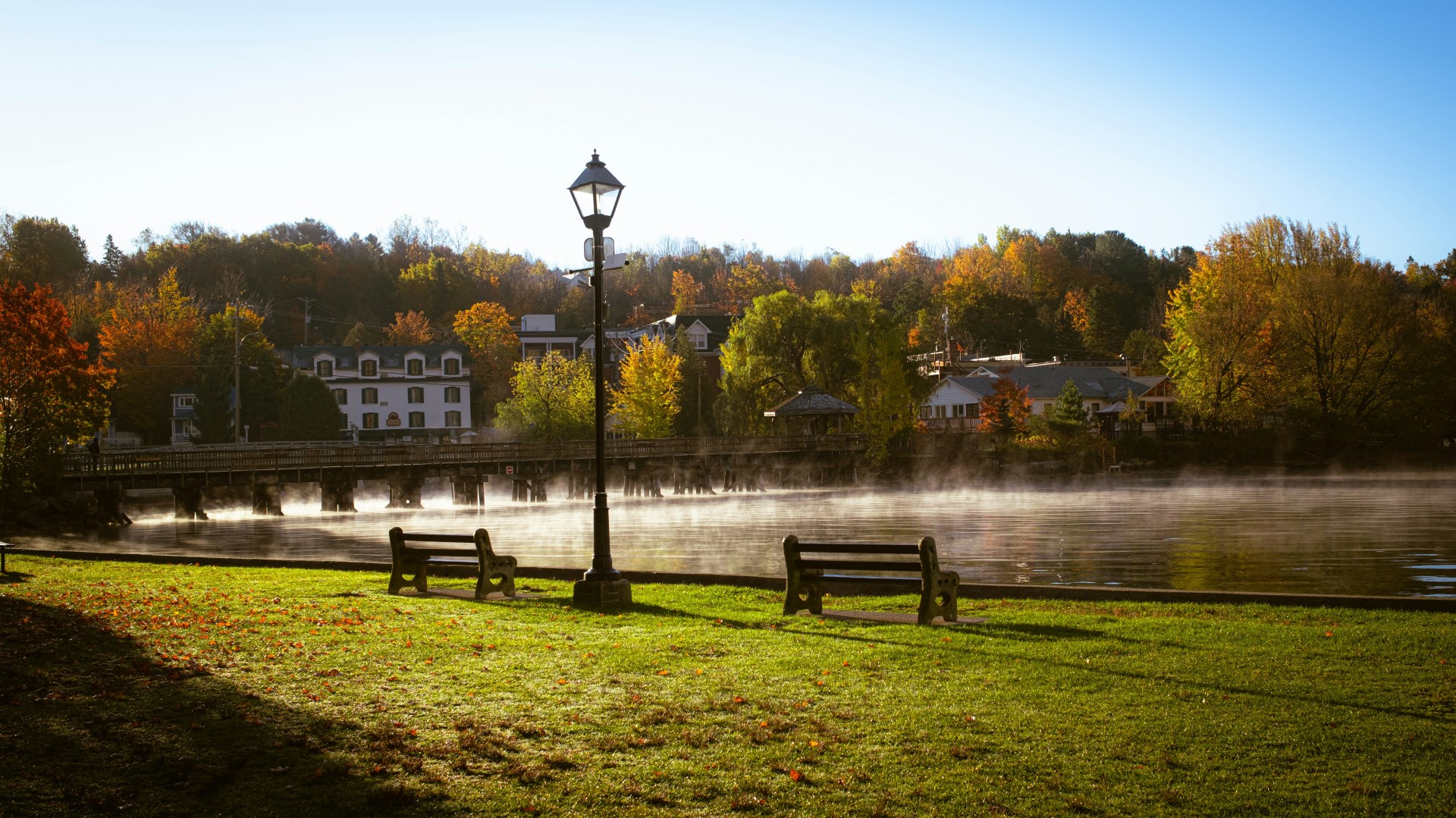
North Hatley is a small village in Quebec’s Eastern Townships, set along the northern shore of Lake Massawippi. The community is known for its quiet residential streets, lakeside setting, and strong connection to outdoor recreation.
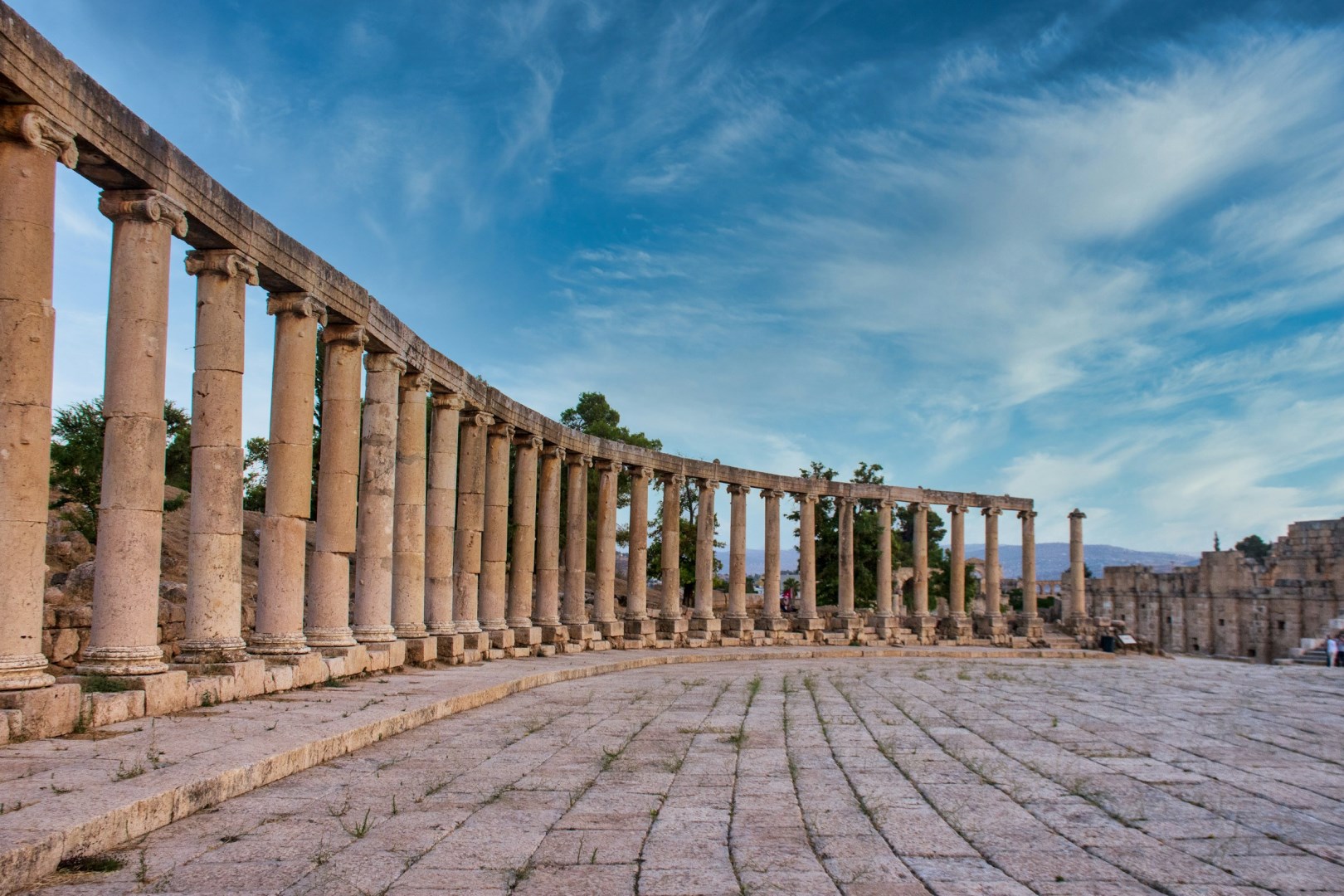
Photo Credit: Photo by Hisham Zayadneh on Unsplash
Photo Credit: Photo by Eyad SR7AN on Unsplash
Photo Credit: Photo by Hisham Zayadneh on Unsplash
Photo Credit: Photo by Matt Jones on Unsplash
Photo Credit: Photo by Hisham Zayadneh on Unsplash
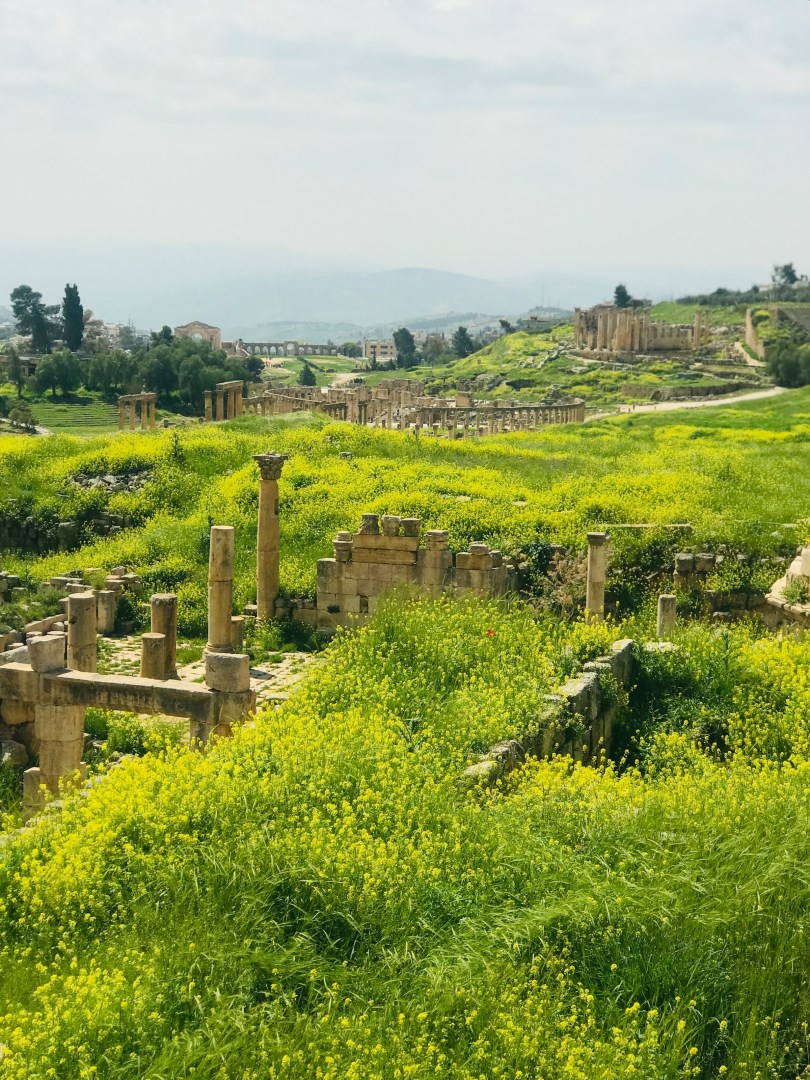
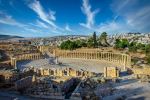
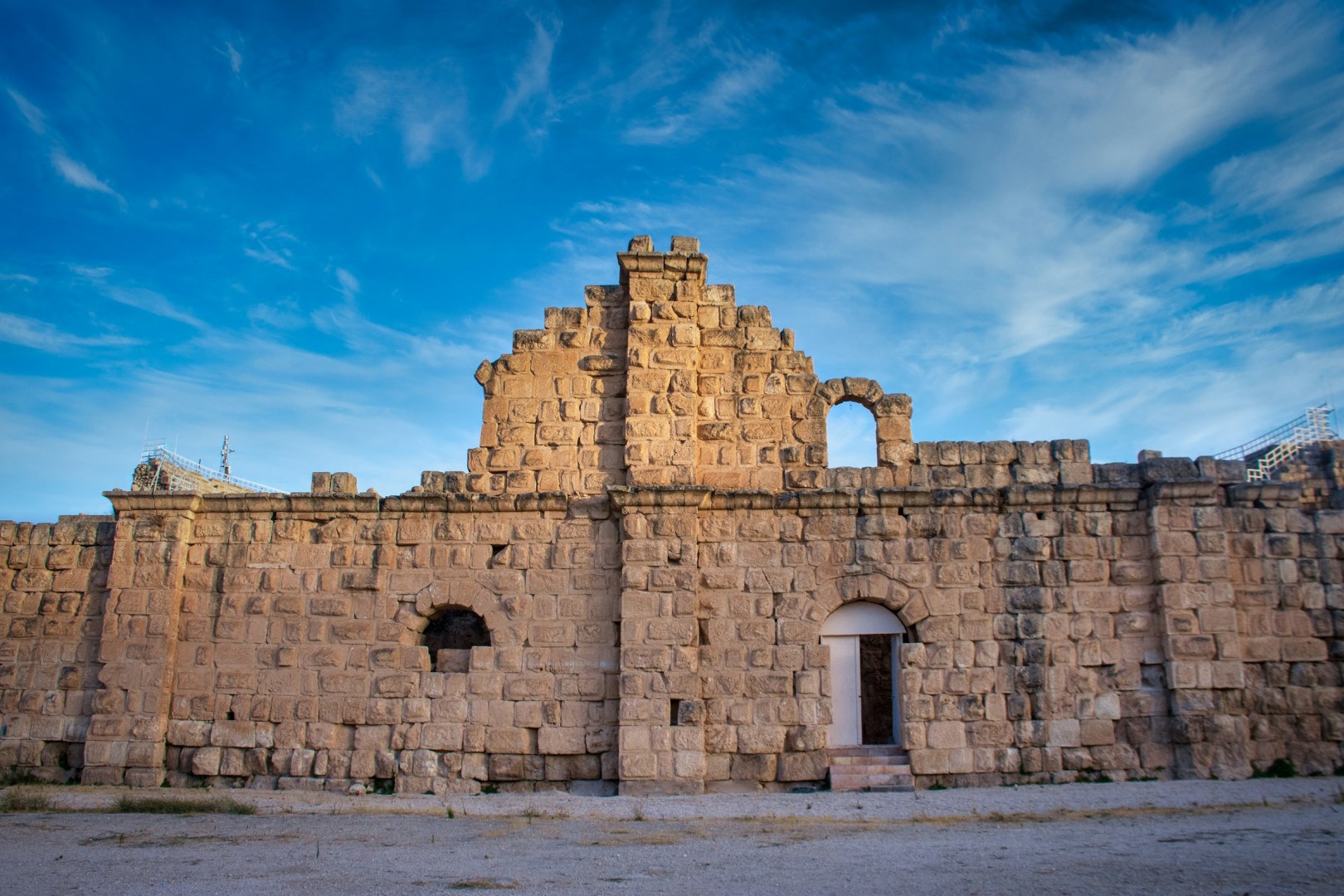
Jerash is reached by a short drive (29 miles, 47km) north of Amman and is an ancient Graeco-Roman city, once known as Gerasa. It has been dubbed the 'Pompeii of the East', because of its extraordinary state of preservation. Jerash is a vast city, which flourished in the centuries immediately preceding and following the Christian era.
At the approach to the city, the visitor is greeted by the imposing triple-arched gateway, built to honour the Emperor Hadrian when he arrived there in 129A.D.
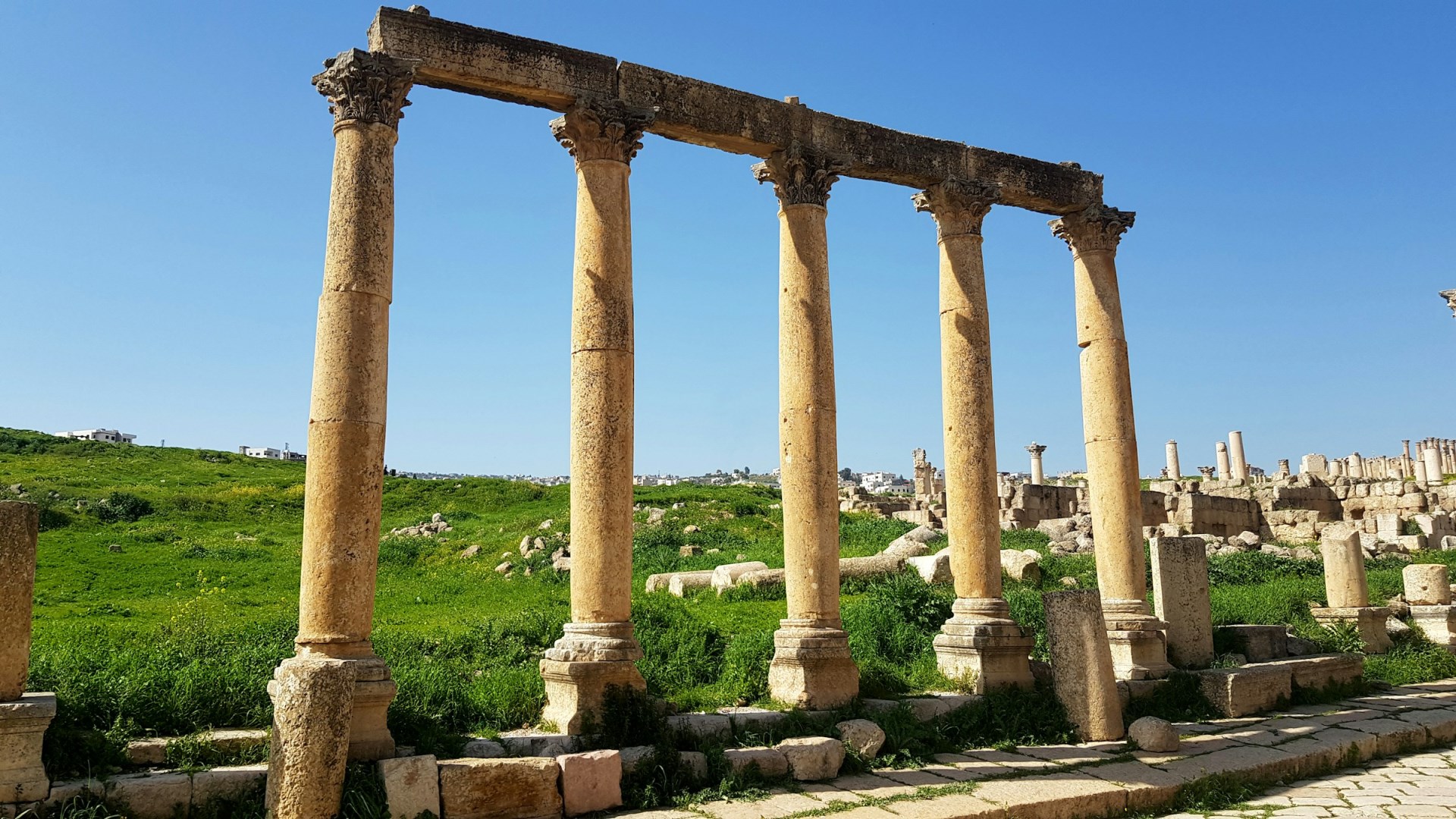
Jerash formed part of the Decapolis, a league of ten cities built by the Romans and dating from the first century B.C. Today, visitors may wander among the original temples, theatres, plazas, public baths and colonnaded streets complete with sculptures and fountains, all enclosed within the still-remaining city walls.
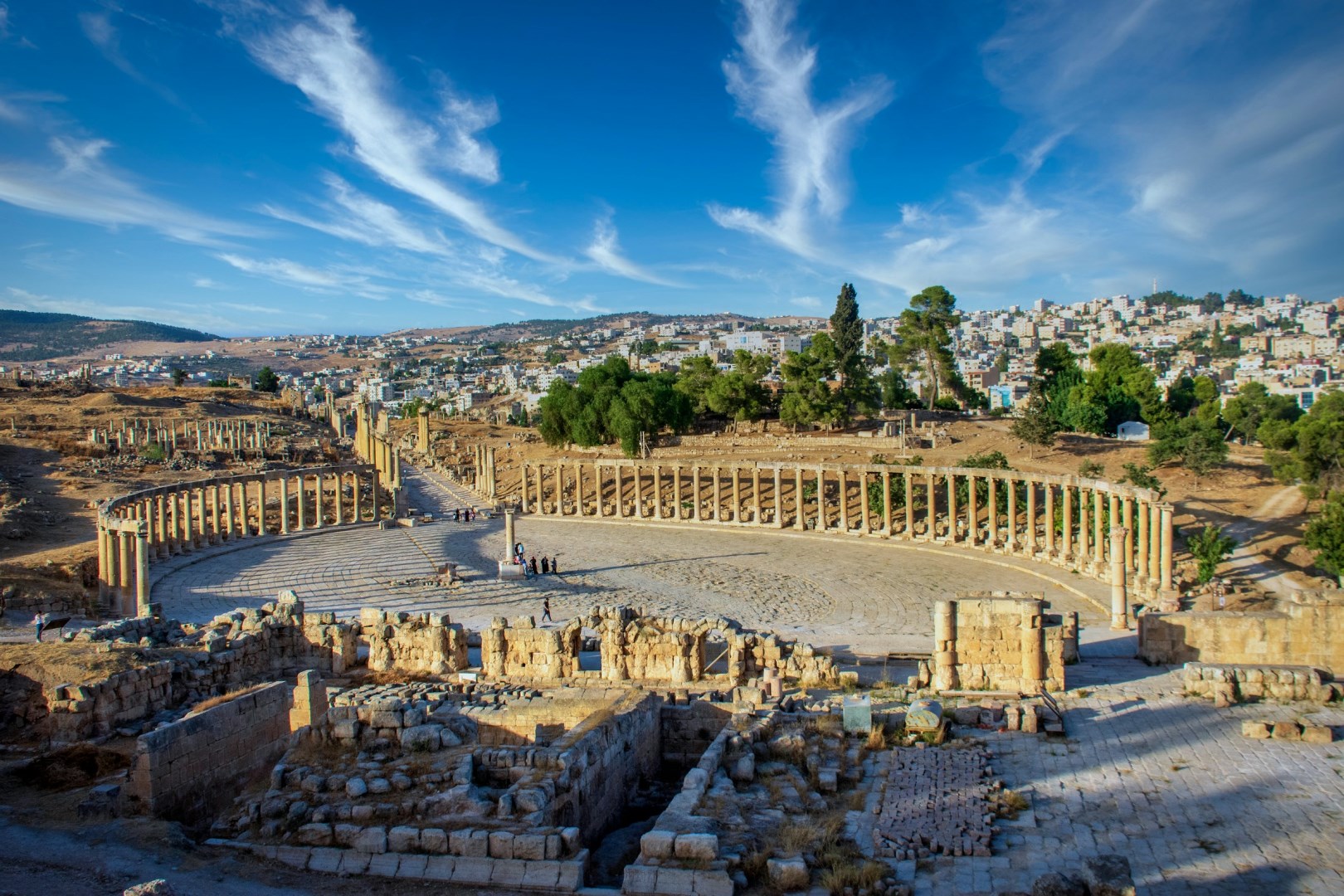
The great oval forum, once the centre of social activity within the city, is impressively well-preserved and is approached by means of the Street of Columns. The city's 14 churches with their beautiful mosaic decoration all date from the Byzantine era.
The annual Jerash Festival of Culture and Arts is held for two weeks
every summer and is an important cultural event, featuring performing artists from all over the world. This event has international
recognition and is a source of great pride to the culturally-minded
people of Jordan. There is also a daily sound and light show in English French, German and Arabic.
Other Popular Destinations in Jordan
Amman
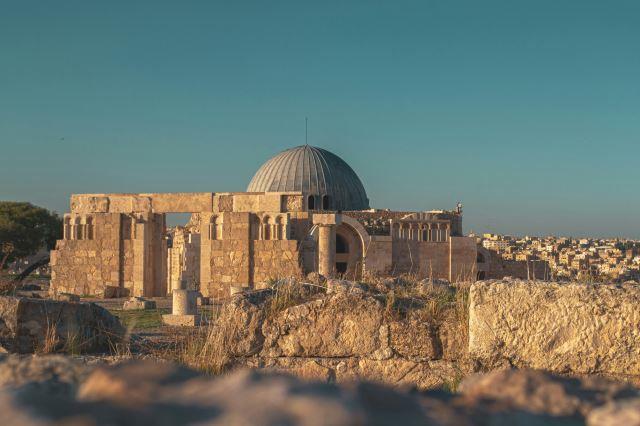
Situated near the Dead Sea, Amman is the capital of Jordan and a cultural and historical hub in the Middle East. Explore this sprawling city, replete with historic landmarks, museums, and mosques, and you’ll soon be enraptured by its blend of metropolitan and ancient beauty.
Petra
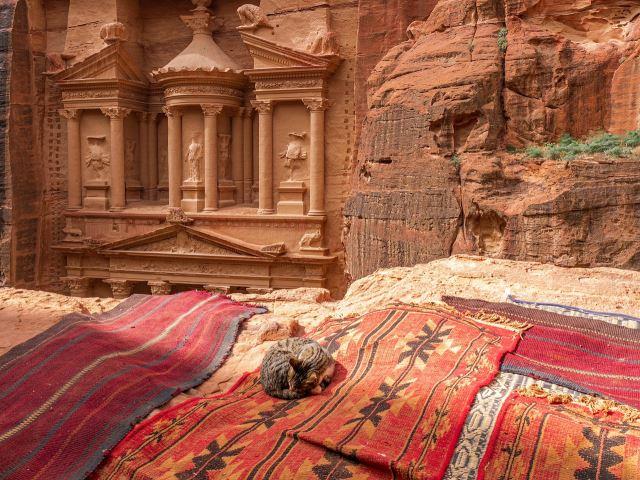
Tucked between Jordan's sandstone cliffs in the southwestern desert, Petra was carved directly into rose-colored rock more than 2,000 years ago. Visitors approaching through the narrow gorge known as the Siq are rewarded with their first glimpse of Al-Khazneh, the Treasury, a towering facade that seems to appear from another world.