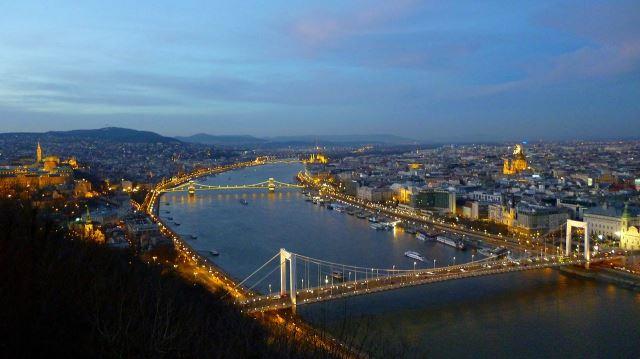
From the elegant streets of Budapest to the rolling hills of the countryside, Hungary captivates with its diversity and charm. Budapest, often called the "Pearl of the Danube," boasts architectural wonders like the iconic Parliament Building, Buda Castle, and the Széchenyi Thermal Baths, where travelers can unwind in warm, mineral-rich waters.
Sequoia National Park, located in California’s Sierra Nevada mountains, is a natural wonderland famous for its giant sequoia trees, including the world-renowned General Sherman Tree. Standing at an astonishing 275 feet tall, the General Sherman is the largest tree on Earth by volume and a must-see for visitors.
Bratislava, Slovakia’s capital, sits along the Danube River at the crossroads of Central Europe. It's the only capital in the world bordering Austria and Hungary, which makes it an easy stop on many European itineraries. Yet Bratislava is more than a waypoint; it offers a compact city center filled with centuries of history. The Old Town’s cobbled lanes lead past Gothic cathedrals, Baroque palaces, and buildings once used by Habsburg royalty.
Situated at the confluence of the rivers Merwede and Noord, Dordrecht is one of the Netherlands' oldest cities, rich in history and character from its charming medieval center and picturesque canals to its beautiful historic buildings. With its intricate network of canals and waterways, the city once played a key role in the Dutch Golden Age and is home to the Biesbosch National Park, one of the largest national parks in the Netherlands.
The Rhône River, flowing through the heart of France and into Switzerland, offers a captivating journey through one of Europe's most scenic and historically rich regions. Originating in the Swiss Alps, this majestic river winds its way southward, carving its path through picturesque landscapes, including the iconic lavender fields of Provence and the lush vineyards of the Rhône Valley. Travelers can immerse themselves in the region's rich history by visiting the ancient city of Vienne, known for its well-preserved Roman ruins, or explore the Renaissance architecture in Lyon, a UNESCO World Heritage site.
The Rhône is celebrated for its remarkable wine regions, particularly the northern Côte-Rôtie and southern Châteauneuf-du-Pape. A wine lover's paradise, the Rhône Valley produces some of France's most renowned wines. Embark on a wine-tasting cruise along the river or visit the famed wine estates to savor exceptional vintages and learn about the region's winemaking traditions. The charming towns of Tain-l'Hermitage and Avignon offer delightful culinary experiences and stunning views of the river.
A notable highlight of the Rhône River is its role in the French Canal du Rhône au Rhin, which connects to the Rhine River, creating a scenic waterway for leisurely cruises. This canal is a gateway to exploring France’s diverse landscapes and historic towns. The Rhône’s serene waters also make it a popular destination for boating enthusiasts and nature lovers, with numerous opportunities for hiking and cycling along the riverbanks.
Fun fact: The Rhône River is home to the unique “Rhone” fish, a rare species found only in its waters. This fish is a testament to the river’s rich biodiversity and ecological importance.